**U.S. and Iran trade diplomacy and fire as Hormuz talks grind on**
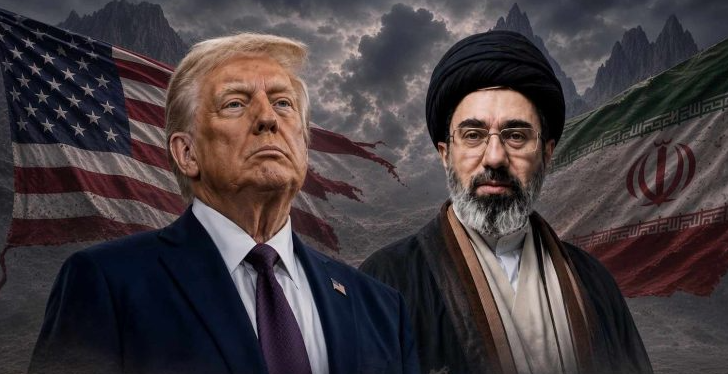
WASHINGTON — The Trump administration is pressing to lock in a broader settlement with Iran even as U.S. forces carry out what officials call defensive strikes in the south of the country and negotiators haggle over language that would reopen the Strait of Hormuz and constrain Tehran’s nuclear program.
Secretary of State Marco Rubio, speaking during a stop in India, said the waterway “has to be open” and “is going to be open,” describing Iran’s interference as “unlawful,” “illegal,” “unsustainable for the world” and “unacceptable.” Asked about recent U.S. strikes, he pointed to talks in Qatar and said Washington would take “a few days” to work through “specific language in the initial document.”
“The president expressed his desire to make it. He’s either going to make a good deal or no deal,” Rubio said.
President Donald Trump has framed any agreement as a sharper break from the 2015 nuclear accord. He has said a deal with Iran would be “good and proper,” and has accused the Obama administration of giving Tehran “massive amounts of cash” and a path toward a nuclear weapon. Vice President JD Vance and other senior officials have been involved in the endgame, according to administration officials familiar with the talks.
**Talks in Qatar, warnings in Tehran**
Iranian officials gathered in Qatar this week as the two sides tried to convert a fragile cease-fire — now about six weeks old, by U.S. accounts — into a more durable arrangement. Foreign Ministry spokesman Esmaeil Baqaei said Tehran and Washington had reached understandings on “a large portion of the issues under discussion,” but he rejected any suggestion that a signing was imminent.
“To say that this means the signing of an agreement is imminent — no one can make such a claim,” Baqaei said at a weekly briefing, accusing Washington of shifting positions.
A senior U.S. official said the outlines of a package are coming into view: Iran would surrender or otherwise get rid of highly enriched uranium, reopen the Strait of Hormuz, and accept a long-term, enforceable pledge not to enrich to weapons-usable levels. In return, the United States would lift its blockade of Iranian ports and ease some sanctions if enrichment is curtailed.
The official said duration — whether 20 years or 30 — mattered less than verification. The same official argued that Iran appears more willing to deal after the U.S. military campaign than it was before, and that any final text would go further than the 2015 deal, which allowed limited enrichment.
Those claims remain unconfirmed in a public text. Iranian officials have repeatedly said they will not surrender what they call a sovereign right to enrich, and they have accused the United States of violating earlier memorandums on Hormuz and the cease-fire.
**Strikes near Bandar Abbas**
The diplomacy collided with force on Monday. U.S. Central Command said American forces conducted “self-defense strikes” in southern Iran “to protect our troops from threats posed by Iranian forces.” Capt. Tim Hawkins, a CENTCOM spokesman, said the targets included missile launch sites and Iranian boats attempting to place mines. He declined to name the ships that came under threat or to give precise coordinates.
A senior U.S. military official said some of the American aircraft and nearly two dozen Navy ships enforcing a blockade in the Gulf of Oman and Arabian Sea — including two aircraft carriers and their escorts — had been threatened by Iranian surface-to-air missiles. The official said the strikes were near the port and naval base at Bandar Abbas.
CENTCOM said it was “using restraint during the ongoing cease-fire.” Iranian media reported explosions in the Bandar Abbas area. Tehran and Washington have clashed in other limited ways since the truce took effect, and each side has accused the other of breaking it.
The U.S. presence in the approaches to Hormuz is large: dozens of warplanes and a substantial naval force assigned to keep vessels from entering or leaving Iranian ports. Rubio and other officials have insisted the strait is an international waterway that cannot be closed or tolled.
**What a deal would have to do**
Any settlement would have to reconcile three hard problems at once: nuclear material and enrichment; freedom of navigation through a chokepoint that carries a large share of the world’s seaborne oil; and a cease-fire that has never fully silenced the guns.
U.S. officials say most of the “basic ideas” are agreed and that work continues on enforcement language. Iranian officials say understandings exist but that Washington keeps moving the goal posts. Mediators in Qatar — and, in earlier phases, Pakistan and Oman — have shuttled language back and forth.
Trump has said he will not sign a weak deal. Rubio has said ships moving freely will be the test, not press conferences. Baqaei has said no one should claim a signature is near.
For now, the two tracks run in parallel: lawyers and diplomats arguing over paragraphs in Doha, and commanders watching missile sites and small boats off Bandar Abbas. Whether that produces “a good deal or no deal,” as Rubio put it, will be decided in the next several days — if the cease-fire holds long enough for the text to catch up with the war it is meant to end.