**Charlie Kirk Fatally Shot at Utah Valley University Event; Suspect Later Taken Into Custody**
OREM, Utah — Charlie Kirk, the conservative activist and founder of Turning Point USA, was fatally shot Wednesday, Sept. 10, 2025, during a student-sponsored outdoor event at Utah Valley University, in an attack that immediately drew a large-scale state and federal investigation.
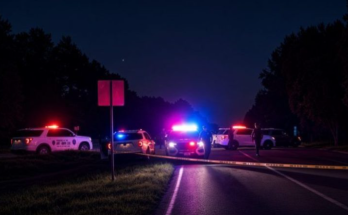
Kirk, 31, was speaking before a crowd of about 3,000 people when gunfire erupted at approximately 12:20 p.m. Mountain Time. Witnesses described a sudden burst of panic as people ran and law enforcement moved to lock down the area. Kirk was transported to Timpanogos Regional Hospital, where he was later pronounced dead.
Utah officials said the shooting was believed to have been a targeted attack. Investigators determined that the gunman fired from the roof of a nearby building overlooking the university courtyard where the event was held. The FBI later described the recovered weapon as a high-powered bolt-action rifle. Evidence was also collected from locations linked to the attack, including the rooftop and a wooded area where authorities said the rifle and ammunition were left.
The Utah Department of Public Safety and the FBI jointly led the investigation, working with the Utah County Attorney’s Office, the Utah County Sheriff’s Office and local police. Early in the response, several people were detained or questioned. Officials later said those individuals had no current connection to the shooting. One person initially taken into custody was later charged with obstruction, officials said, and was not identified as the shooter.
Authorities appealed to the public for photographs, video and other information that could help identify the person responsible. The FBI announced a reward of up to $100,000 for information leading to an identification and arrest. Within about 33 hours, officials announced that a suspect had been taken into custody. They emphasized that the broader investigation would continue.
University police said six officers were assigned to the event, in addition to Kirk’s private security detail. The shooting nonetheless transformed a planned political discussion into a scene of confusion and fear, raising immediate questions about security at large public events on college campuses.
Kirk had built Turning Point USA into one of the most prominent conservative youth organizations in the country. He frequently appeared on campuses to speak about politics, free speech and contested cultural issues, often taking questions from students who disagreed with him. Those appearances made him a highly visible figure in the conservative movement and a frequent target of protest.
His death prompted an outpouring of statements from political leaders. Utah Gov. Spencer Cox condemned the killing and described it as a political assassination. Figures from both parties denounced the use of violence in political life. President Donald Trump, a close ally of Kirk, announced the death publicly and praised Kirk’s work with young voters.
Kirk is survived by his wife, Erika Kirk, and their children. Relatives, colleagues and supporters described the loss as devastating. Students and others who were at the event said they were still processing the sudden violence they had witnessed.
The killing also intensified a national debate over political polarization, campus safety and the risks faced by high-profile speakers. Kirk’s events were designed to invite argument and public exchange. The attack underscored how difficult it can be to protect open debate while also securing large outdoor gatherings.
As investigators continued to examine the circumstances of the shooting, officials said they were still gathering evidence and reviewing digital and physical material from the scene. Kirk’s death left a sharp absence in the organization he founded and became a stark reminder of the consequences when political conflict turns to violence.
Turning Point USA and Kirk’s family said they would continue the work he had begun. For the university community and for those who watched the events unfold in real time, the shooting marked a sudden and lasting rupture — one that authorities, students and political leaders said should not be allowed to define the terms of public argument in the United States.