JEFFERSON CITY, Mo. — The Missouri Supreme Court ruled unanimously Thursday that a Republican-drawn congressional map cannot be used in the November midterm elections unless voters first approve it in a statewide referendum, a decision that blocks the new lines for this fall and keeps the districts adopted after the 2020 census in place.
The seven-member court, including five Republican-appointed judges, reversed a Cole County Circuit Court ruling and found that a referendum petition submitted in December was legal, sufficient and timely. Secretary of State Denny Hoskins, a Republican, had rejected the petition on Aug. 4, the day of the state’s primary election, arguing that Missouri’s referendum process does not apply to congressional redistricting.
“The referendum petition was legal, sufficient, and timely, and the secretary incorrectly concluded otherwise,” Judge Ginger K. Gooch wrote for the court. The legislation containing the new districts “did not go into effect and will not go into effect unless and until approved by the voters.” As a result, the map drawn after the 2020 census “remains in full force and effect for the November 2026 general election.”
The court ordered Hoskins to certify the petition and place it on the Nov. 3 ballot by Sept. 8. It also enjoined state officials from using the new map unless voters approve House Bill 1, which would take effect 30 days after the election if it passes. If voters reject it, the 2022 map would remain in force and lawmakers would need to pass a different plan if they wanted new lines.
Republicans enacted the map during a special legislative session in September 2025. It was designed to give the party a 7-1 advantage in the state’s eight-member U.S. House delegation, up from the current 6-2 split, by reconfiguring districts in the Kansas City area and targeting longtime Democratic Rep. Emanuel Cleaver. The new lines were used in last month’s primary.
Opponents, organized as People Not Politicians, collected more than 300,000 signatures by Dec. 9, 2025 — well above the threshold needed to force a vote. The Missouri Constitution allows a referendum on “any act of the general assembly.” The court held that congressional redistricting is not exempt from that provision.
Attorney General Catherine Hanaway, a Republican whose office represented Hoskins, said she would immediately appeal to the U.S. Supreme Court. “Never before in American history has a court overturned a congressional map after a primary and before a general election,” she said. “This unprecedented decision clearly violates federal law and has thrust our state into a full-fledged constitutional crisis.” She argued the ruling would disenfranchise voters who participated in the August primary under the new lines.
The Missouri Supreme Court on Friday denied the state’s request for a stay pending that appeal. Election officials now face a compressed timeline to prepare ballots under the older map, meaning some voters will see different House candidates in November than they did in the primary.
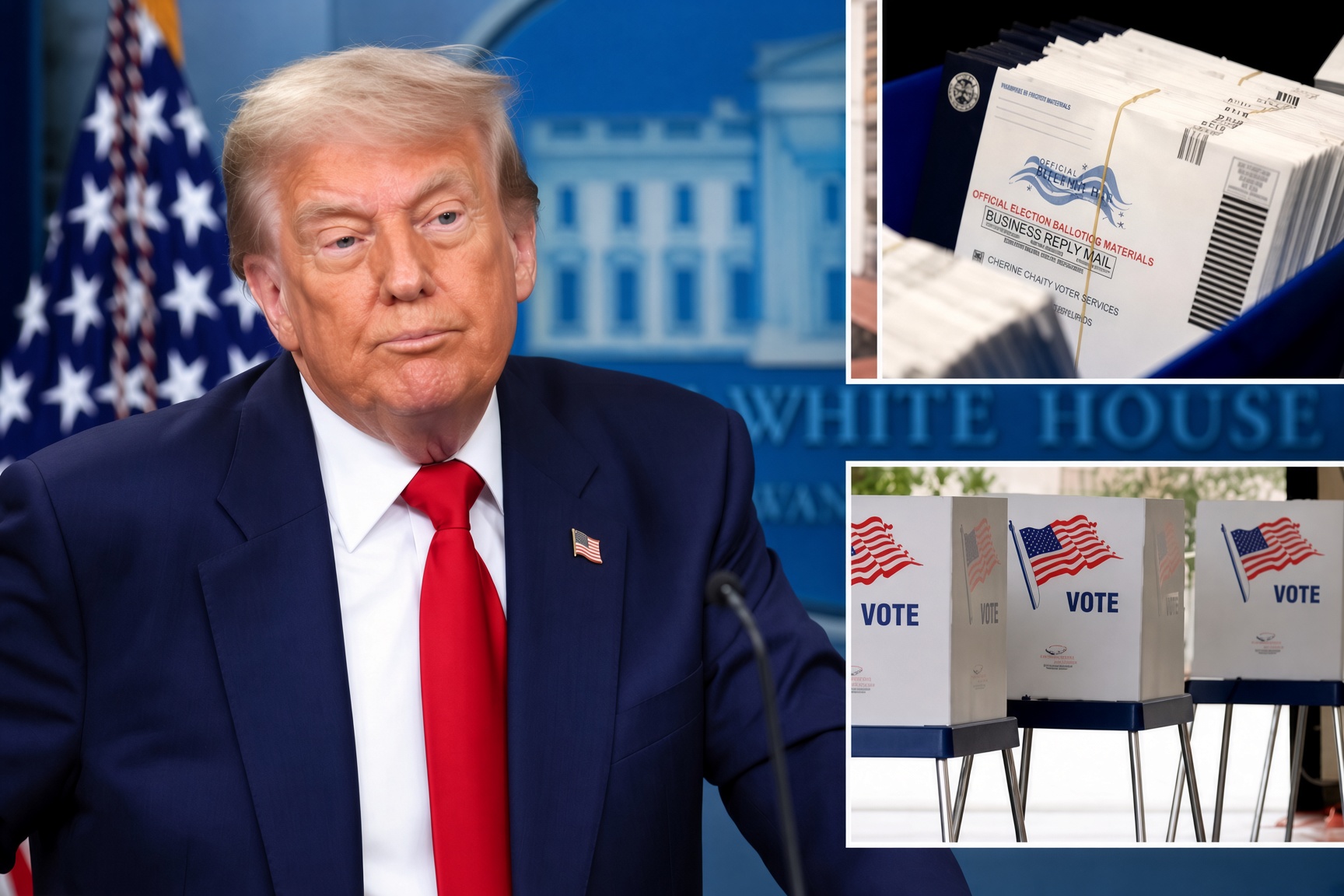
President Donald Trump criticized the ruling on Truth Social, calling it “ridiculous” and “unConstitutional.” He said the timing left insufficient time to resolve the map before Election Day. Republican Gov. Mike Kehoe, who backed the new districts, said he was “extremely disappointed in today’s decision by unelected judges and their lack of respect for the legislative process.”
Missouri, once a swing state, has trended reliably Republican in statewide and federal contests over the past two decades. The ruling is a setback for the GOP’s national effort to protect its narrow House majority through mid-decade redistricting in several states. Democrats and voting-rights groups hailed the decision as an affirmation of the state’s referendum power.
If the U.S. Supreme Court declines to intervene or upholds the state court, Missouri voters will decide the map’s fate on Nov. 3. Approval would allow the new lines to take effect for later elections, subject to any remaining challenges. Rejection would leave the 2022 districts in place unless the Legislature acts again.
The case underscores the legal and logistical strain of late changes to congressional maps so close to a general election. Local clerks must finalize ballots under a tight deadline, and candidates nominated under one set of lines may now compete under another. How federal courts respond in the coming days will determine whether the state court’s order stands or whether the new map returns for November.