**Leavitt Defends White House Press Access Changes, Contrasts Trump Outreach With Biden Record**
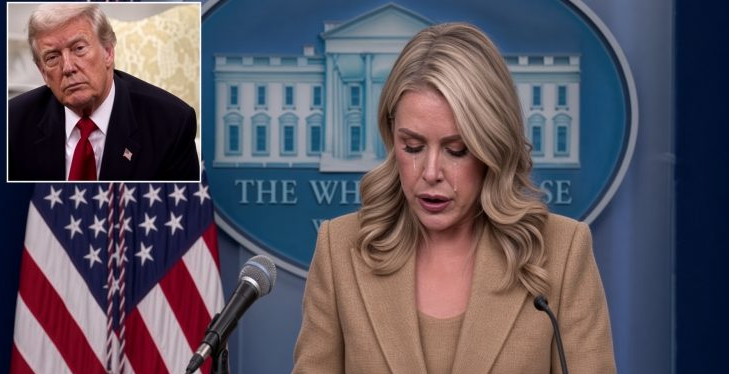
WASHINGTON — White House Press Secretary Karoline Leavitt defended the Trump administration’s revisions to press-pool and media-access rules, arguing that the changes expand participation for a wider range of outlets rather than restrict coverage of President Donald Trump.
Speaking at an Axios event with co-founder Mike Allen, Leavitt rejected descriptions of the new procedures as crackdowns. She said the White House is opening the 13-member presidential press pool and related access points to more print, digital and independent journalists instead of reserving those slots for a small group of long-established organizations.
“I don’t view them as restrictions,” Leavitt said. “We view them as opening access to more outlets, more voices, more news, journalists and outlets.” She asked why any single organization should hold a permanent place in the pool that covers the president each day, noting that thousands of outlets hold White House credentials and hundreds cover the administration regularly.
The exchange centered on two flashpoints: the composition of the press pool and the administration’s relationship with the Associated Press. Allen asked whether limits affecting the AP risked weakening the historical record, pointing to AP photographer Evan Vucci’s widely circulated image of Trump after the assassination attempt in Butler, Pennsylvania.
Leavitt did not accept the premise. She said the administration has given print outlets such as Axios a better chance to rotate into the pool and that equal opportunity, not monopoly, should govern access to the Oval Office and Air Force One.
**Dispute With the Correspondents’ Association**
The White House Correspondents’ Association has criticized the administration for asserting more control over which outlets travel with the president and cover closed events. Allen cited the association’s view that the government should not decide which independent news organizations cover it.
Leavitt answered that a small board of journalists should not determine who enters the Oval Office or flies on Air Force One. Access, she said, should be distributed more widely among qualified outlets. She also rejected the charge that the White House is stacking coverage in Trump’s favor, saying critical organizations still attend briefings and cover the president.
The argument reflects a larger fight over who manages presidential access. For decades the correspondents’ association has played a central role in rotating pool spots. The Trump White House has taken more of that authority in-house, restored credentials revoked under President Joe Biden, and created space for newer digital outlets, podcasters and conservative platforms alongside legacy newspapers and networks.
Leavitt framed the shift as a response to how Americans now get news. Trump’s 2024 campaign relied heavily on nontraditional media; she said the White House has a duty to continue that approach in office. “It’s not about ideology,” she said. “It’s about increasing the wide array of outlets that have access.”
**Biden Comparison**
Leavitt and her allies have repeatedly contrasted Trump’s availability with Biden’s. An Axios report published in July 2025 examined Biden’s media appearances at a comparable point in his term and found he had conducted 164 press conferences and interviews, versus 468 for Trump. Those counts depend on how interviews, formal briefings and other events are classified, and they remain part of a contested debate rather than a settled official tally.
Reporters who covered the Biden White House have long said the former president held fewer formal news conferences than several recent predecessors. Leavitt has used that record to argue that complaints about Trump-era access ignore what she calls years of limited presidential engagement.
Critics of the current policy say expanding the pool and requiring appointments to enter certain West Wing press offices can still reduce unscripted contact and give the administration more leverage over who is present for key moments. The White House has separately limited walk-up access to the press secretary’s suite after officials accused some reporters of eavesdropping and unauthorized recording. Leavitt has described those steps as workplace and security measures, not ideology.
**What Has Changed**
In practice, the administration has restored hundreds of hard passes it says were wrongly revoked in 2023, added “new media” seating in the briefing room, and allowed a broader mix of outlets into pool rotations. Leavitt has said the White House still answers inquiries from across the spectrum and that Trump has continued to take questions more frequently than Biden did.
Journalists and press-freedom groups counter that independence depends on more than the number of badges issued. They worry that government selection of pool members, combined with public attacks on specific outlets, can chill coverage even when more voices are technically present.
Leavitt’s appearance with Allen did not resolve that tension. It did make the administration’s theory explicit: the old system privileged a handful of institutions; the new one should reflect a fragmented media market and a president who built his return to office outside the traditional briefing-room circuit.
Whether that produces more transparency or a more managed press environment will be measured in who actually gets into the room, how often the president answers questions, and whether independent reporting on the White House remains possible when access is granted on the administration’s terms. The debate over those questions is likely to continue as long as the pool, the briefing room and Air Force One remain scarce and politically valuable resources.