**Resurfaced photos of Trump boarding Marine One spark renewed debate over appearance and online interpretation**
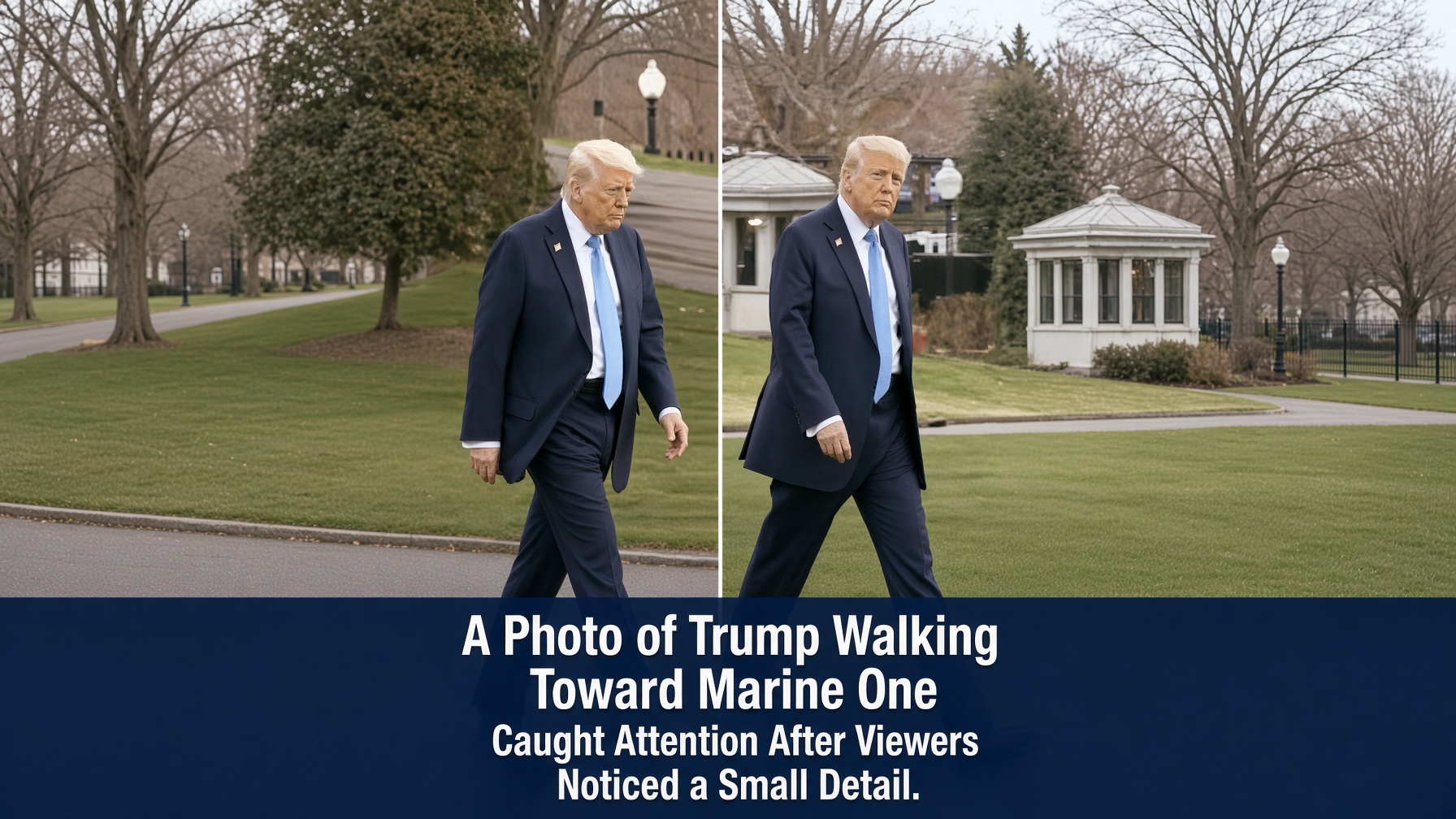
WASHINGTON — Photographs of former President Donald Trump walking across the White House South Lawn toward Marine One have recirculated widely on social media in recent days, prompting a fresh round of commentary about his appearance and reigniting familiar arguments over how political images are read online.
The pictures, which first gained traction in 2025, show Trump approaching the presidential helicopter used for short official flights. In the images, he is dressed in a dark suit and appears to move at a measured pace across the lawn. As the photos have been shared again in 2026, many users have focused less on the official setting than on details of posture, the fit of his clothing, and perceived changes in his physique compared with earlier public appearances.
Some observers described the suit as looking looser than in prior years and suggested Trump had lost weight. Others pointed to his gait or stance. A portion of the commentary treated the images as evidence of improved fitness; another portion treated the same visuals as possible signs of health strain. Much of the discussion has remained speculative and unverified.
Trump has repeatedly said in interviews and public remarks that he is in good health and able to keep a demanding schedule. Age is frequently cited in coverage of senior American political figures, including Trump, but medical professionals note that appearance in a single photograph is a poor proxy for overall condition. Individual health varies widely and cannot be reliably assessed from brief, staged public moments.
The White House and Trump’s representatives have, in past instances of health-related rumor, generally issued short denials of unconfirmed reports. No official medical disclosure has substantiated the specific claims attached to these particular images.
The episode illustrates a broader pattern in digital media. The same photograph can be recirculated months or years later with new captions that reflect the politics of the moment rather than the original context. Algorithms tend to reward emotionally charged or visually striking posts, so images of well-known figures often become vehicles for preexisting arguments about vitality, aging, lifestyle, or fitness for office.
Trump’s well-documented preference for fast food has long featured in coverage of his habits. Reports have also noted that public figures sometimes adjust diet or routine over time, including, in Trump’s case, comments from associates about reduced consumption of certain items. Those details, however, do not amount to a confirmed medical narrative. Speculation about weight-loss drugs, sudden illness, or dramatic lifestyle overhauls should be treated as rumor unless supported by primary sources.
Visual interpretation is especially prone to error. Lighting, camera angle, clothing cut, and the short duration of a walk across the lawn all affect how a person looks in a still frame. Commentators who caution against drawing medical conclusions from such images argue that the photos document an official movement, not a clinical examination.
The Marine One pictures themselves belong to a large archive of White House photography that records routine presidential travel. Once they leave that official context and enter social feeds, they acquire new meanings. In some cycles they are presented as proof of vigor; in others they are presented as cause for concern. The underlying image does not change; the surrounding political climate does.
Public figures who remain visible after leaving office, or who continue to campaign and comment, attract continuous scrutiny of stamina and appearance. That scrutiny is not new, but social platforms have compressed the time between an image appearing and competing interpretations spreading. The result is often a conversation that says more about the audience than about the subject.
As of mid-September 2026, no authoritative medical statement has confirmed the health-related claims circulating alongside the resurfaced photographs. Responsible coverage therefore separates what the pictures actually show—a former president walking to a helicopter—from the inferences layered on top of them.
The most durable lesson of the episode is methodological rather than political. Photographs of public officials will continue to travel, and they will continue to be captioned according to the interests of whoever shares them. Distinguishing documented fact from visual guesswork remains the basic requirement of both journalism and informed public discussion.