**Viral ‘452-year’ teen sentence is false, fact-checkers say; real case ended in 15 years**
A short courtroom clip circulating on Facebook and other platforms in 2026 claimed a teenager had been sentenced to 452 years in prison. Captions hinted at a sexual assault conviction. The video showed a young man in an orange jumpsuit reacting as a voice announced the sentence. The post spread quickly and revived familiar arguments about whether courts treat young offenders too harshly or not harshly enough.
The claim is false.
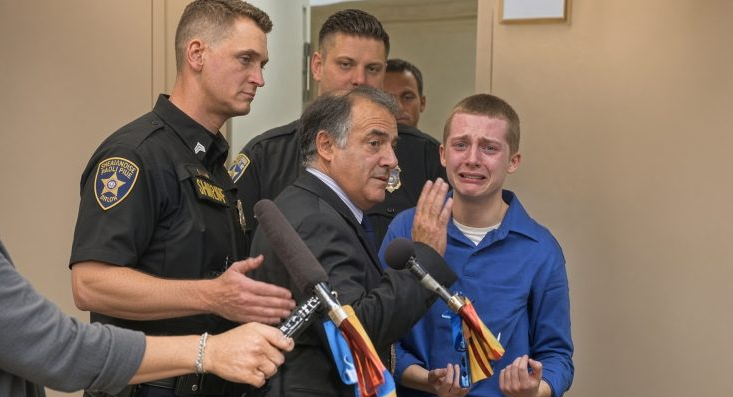
Fact-checkers at Snopes and earlier reporting by the Associated Press found that the footage is real but the audio and caption are not. The images come from a 2015 probable-cause hearing in York County, South Carolina, involving then-17-year-old Jacob Matthew Morgan of Rock Hill. The voiceover that names a 452-year term appears to have been generated or added later. No U.S. court record shows a teenager receiving a 452-year sentence in that case—or in any matching case located by news archives and search engines. Similar clips have previously attached other invented totals, including 137 years, to the same images.
Morgan was charged after a March 6, 2015, fire at a mobile home that killed his 14-month-old stepbrother, Joshua Hill. Prosecutors initially sought murder and first-degree arson counts. In February 2016 he entered a plea to involuntary manslaughter, third-degree arson (an Alford plea, accepting punishment without admitting the factual allegation), and unlawful conduct toward a child. A judge imposed a combined 15-year prison term, with additional time suspended to probation. He was released in late 2022 after serving roughly half the sentence and began a period of probation. His family has long said he is autistic, disputed parts of the investigation, and maintained that he did not intend to kill the child. Prosecutors described a fire set in more than one place and a failure to summon help.
The viral version of the story flattened that record into a single shocking number. That number did what sensational posts often do: it pulled viewers into a debate that is real even when the premise is not.
Juvenile sentencing remains contested. U.S. Supreme Court rulings have limited mandatory life without parole for people who were under 18 at the time of the offense, citing still-developing brains, greater capacity for change, and the need for individualized review. States differ on how far those principles go. Some impose long consecutive terms that, in practice, can last most of a lifetime. Others emphasize rehabilitation, parole eligibility, and services that address trauma, disability, and family instability. Public reaction to extreme figures—real or invented—usually splits along the same lines: victims and some communities demand certainty and accountability; defense advocates and many researchers warn that stacking decades onto a teenager can ignore both science and the possibility of a different adult life.
The Morgan case itself illustrated that tension. Original charges carried the prospect of decades or life. The plea produced a finite term, early release, and continuing conditions. Family members sat through hearings that mixed grief, loyalty, and legal risk. Those details rarely travel with a nine-second clip.
Stories that go viral on the strength of a single number often skip the charges that were actually filed, the plea that was taken, and the sentence that was imposed. They also skip the harder work of prevention: recognizing a crisis before it becomes a crime, supporting families under strain, and matching interventions to a young person’s actual needs. The 452-year headline did not describe a court outcome. It did describe how quickly a manipulated clip can stand in for a conversation the justice system is already having—about age, harm, and what a sentence is supposed to accomplish.