**White House denies online claims that Trump was hospitalized**
Unverified posts claiming President Donald Trump had been taken to a hospital after sudden health concerns spread rapidly this month on social media and in some digital news feeds. The White House has rejected those reports. No confirmed medical statement from authorized physicians or official representatives has substantiated a new emergency hospitalization.
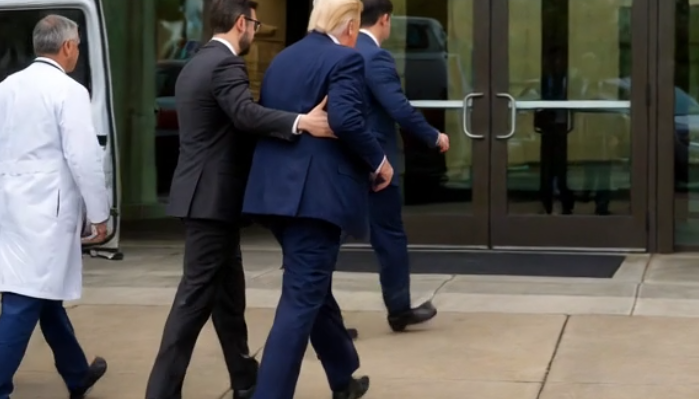
The rumor cycle followed a familiar pattern. Similar claims have circulated at intervals over the past year, including assertions that Trump had been taken to Walter Reed National Military Medical Center. Fact-checks found that some circulating motorcade video was older footage from 2024, not evidence of a current hospital transfer. Officials have previously said the president remained at work when such speculation erupted after routine scheduling moves, including a press “lid.”
Hospitalization rumors should not be confused with the limited health information the administration has released. White House officials have said Trump was evaluated for mild swelling in his lower legs and diagnosed with chronic venous insufficiency, a common condition in older adults in which vein valves work less efficiently and blood can pool in the legs. Officials said ultrasound testing did not show deep-vein thrombosis or other more serious findings they publicly listed, and they described the condition as benign. Bruising on his hands has been attributed by officials to frequent handshakes and the use of aspirin as a preventive measure.
In a May 2026 memo after a checkup at Walter Reed, White House physician Dr. Sean Barbabella said Trump remained in “excellent health” and was “fully fit” to carry out the duties of the office. The memo described improvement in leg swelling compared with the prior year, normal cardiac function, and a neurological examination that officials said showed normal mental status. Those statements are the most recent detailed official medical summary available; they do not confirm the more dramatic hospital-emergency narrative that later circulated online.
Public appearances have also undercut claims of an unannounced emergency admission. Trump attended a Sept. 11 memorial at the Pentagon and later appeared at events in Ireland, where local hospitals made routine contingency plans typical of a presidential visit. Photographs and video from those events prompted separate commentary about his face, gait, and energy, but commentary is not a diagnosis, and no official source has announced an acute hospitalization tied to those appearances.
The speed of the latest rumor wave illustrates how health claims about a sitting president travel. High public interest, recycled video, and engagement-driven distribution can turn incomplete or false posts into a trending narrative within minutes. Hospitalization, even when it occurs, is not automatically evidence of a life-threatening emergency; presidents also undergo planned evaluations under tight security. In this case, the core problem is simpler: the specific claim of a sudden hospital admission was not backed by verified reporting.
News organizations and readers face the same test. Confirmed facts come from official medical memos, named spokespeople, and independent reporting that can be checked. Early social-media accounts that describe “symptoms,” “diagnostic tests,” or “rapid transport” without sourcing should be treated as unconfirmed. Repeating those details as if they were established only widens the gap between what is known and what is merely circulating.
As of this writing, the White House position is that the hospitalization rumors are false. Until a credentialed official statement or independently verified reporting says otherwise, that is the factual baseline. Public concern about any president’s health is legitimate. Substituting rumor for confirmation is not.