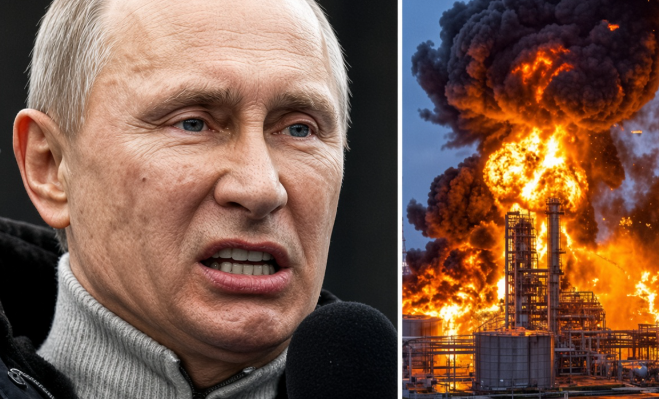
Reports of Strikes Near Moscow Raise Questions About Russia’s Security and War Strategy
Claims of a Ukrainian strike targeting Russia’s capital have prompted renewed attention to the vulnerability of infrastructure around Moscow and the potential consequences for the Kremlin’s wartime strategy. The headline describes the city as being in flames and suggests that Vladimir Putin is considering surrender, but neither the scale of the alleged attack nor the claim about surrender is established by the headline alone.
Ukraine has increasingly pursued long-range operations against Russian military facilities, energy infrastructure, and logistics networks. Such strikes can trigger fires, disrupt transportation, strain air-defense systems, and force Russian authorities to redirect resources toward protecting strategic locations. Attacks near Moscow can also carry symbolic weight because the capital represents the political center of Russia’s war effort.
However, reports of explosions or fires do not automatically establish the extent of the damage, the identity of the target, or the strategic impact of an operation. Similarly, speculation about Putin considering surrender would require credible evidence, such as verified statements or reliable reporting, rather than dramatic interpretations of battlefield developments.
The broader question is whether Ukraine’s long-range campaign is producing sustained effects on Russia’s military capabilities and decision-making. Assessing that requires examining confirmed targets, independently verified damage, and any documented changes in Russian operations or policy.
Until more evidence is available, claims that Moscow was engulfed in flames or that Putin is preparing to surrender should be treated cautiously. Independent confirmation is necessary to distinguish the reported strike from speculation and wartime messaging.