**Supreme Court bars aiding-and-abetting claims under Alien Tort Statute and Torture Victim Protection Act**
WASHINGTON — The Supreme Court on June 23 ruled 6-3 that federal courts may not invent new private causes of action under the Alien Tort Statute and that the Torture Victim Protection Act does not impose liability for aiding and abetting torture. The decision in *Cisco Systems, Inc. v. Doe I* reversed a Ninth Circuit ruling that had allowed a long-running suit by Falun Gong practitioners against Cisco Systems and two of its executives to proceed.
The plaintiffs alleged that Cisco developed and sold networking equipment and related systems that Chinese authorities used to identify, detain, and persecute practitioners of Falun Gong, a spiritual movement Beijing banned in 1999. They sued in 2011 under the ATS, a 1789 statute giving federal courts jurisdiction over certain claims by aliens for violations of international law, and under the TVPA, a 1991 law that creates an express civil action against individuals who, under color of foreign law, subject another person to torture or extrajudicial killing. A district court dismissed the case; the Ninth Circuit revived aiding-and-abetting theories under both statutes. The Supreme Court granted review and reversed.
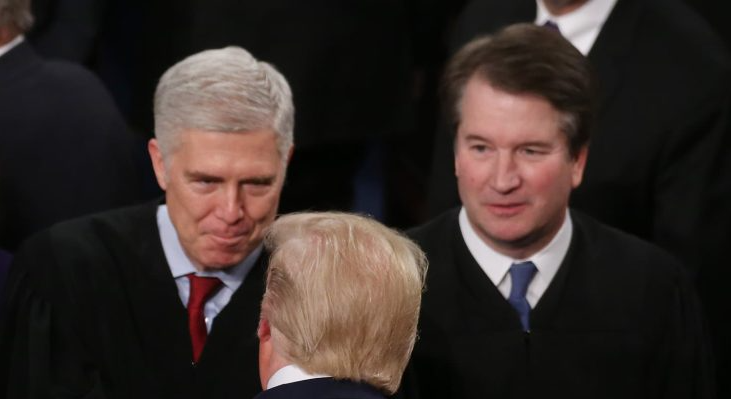
Justice Amy Coney Barrett wrote for the Court, joined by Chief Justice John Roberts and Justices Clarence Thomas, Samuel Alito, Neil Gorsuch, and Brett Kavanaugh. “Today, we close the door that *Sosa* cracked and hold that courts may not create new causes of action for violations of international norms,” Barrett wrote, referring to the 2004 decision *Sosa v. Alvarez-Machain*, which had left a narrow opening for some ATS claims. “We also hold that the Torture Victim Protection Act of 1991, which contains an express cause of action, does not provide for aiding-and-abetting liability.”
Barrett framed the result as a separation-of-powers holding. The ATS, she wrote, is jurisdictional only; it does not itself authorize judges to fashion new remedies. Creating a cause of action, she said, “is an extraordinary act that places great stress on the separation of powers.” The Court warned that judicially invented liability for overseas conduct could produce “adverse foreign policy consequences” that Congress and the executive, not the courts, are structured to weigh. On the TVPA, the majority applied the principle that when Congress wants aiding-and-abetting liability it says so expressly. Silence, Barrett wrote, was “enough to settle the issue.”
The Trump administration supported Cisco. The solicitor general’s office filed a brief and participated in oral argument, arguing that expansive ATS litigation would expose U.S. firms to unpredictable suits over foreign-government conduct and encroach on diplomatic and commercial policy reserved to the political branches. Cisco has denied that it customized technology to enable persecution, calling the allegations unfounded.
Justice Ketanji Brown Jackson, joined by Justice Elena Kagan, concurred in part and dissented in part. She agreed that the ATS should not be read to authorize new judge-made claims of the kind the Ninth Circuit allowed, but she argued that the TVPA’s text could reach some forms of aiding and abetting. Justice Sonia Sotomayor dissented more broadly, joined in substantial part by Kagan and Jackson. She accused the majority of jettisoning two decades of precedent after *Sosa* and of shutting “the courthouse doors to almost any claimed violation of international law under the ATS.” On the TVPA, she wrote that the statute’s language includes those who aid and abet torture and that she would have affirmed the Ninth Circuit on that ground.
The ruling continues a line of decisions narrowing the ATS after a period in which human-rights lawyers used it against corporations for alleged complicity in abuses abroad. Courts and commentators have long noted the tension between providing a forum for serious international-law claims and keeping U.S. judges out of foreign-policy disputes and commercial relationships with authoritarian governments. Supporters of the decision say it restores Congress as the branch that creates remedies and reduces forum-shopping against American companies. Critics, including the plaintiffs’ counsel, say it leaves victims of overseas atrocities without a U.S. civil path unless Congress writes a new statute, and they urge lawmakers to do so.
The case was remanded for proceedings consistent with the opinion. Because the Court held that neither statute supports the aiding-and-abetting theories on which the revived claims depended, the practical effect is to end this litigation against Cisco and its executives on those grounds. Broader questions about corporate due diligence, export controls, and congressional responses to alleged misuse of dual-use technology remain for the political branches. The decision does not resolve the underlying factual dispute over how Cisco’s products were used in China; it holds that these two statutes do not supply the cause of action the plaintiffs sought.