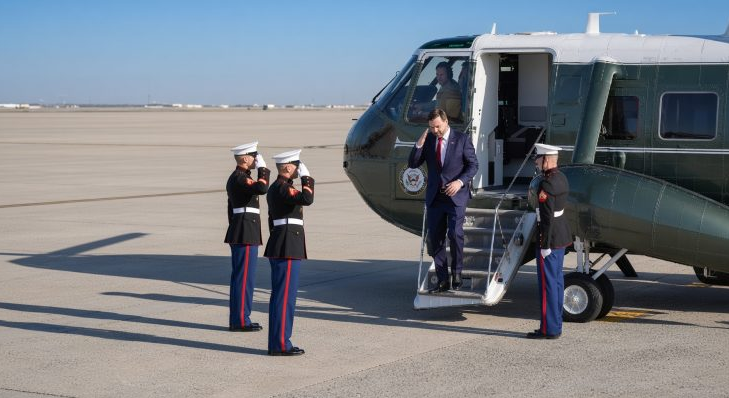
**WASHINGTON** — Vice President JD Vance was pulled back to the White House on Tuesday instead of flying to Islamabad to lead a new round of U.S.-Iran talks, as officials said it remained unclear whether Tehran would send a delegation to Pakistan.
Vance had been expected to depart with special envoy Steve Witkoff and presidential adviser Jared Kushner for negotiations hosted by Pakistani mediators. CNN’s Alayna Treene reported that the vice president would instead attend policy meetings in Washington. Sources told Treene it was not certain the trip would proceed at all.
“We don’t know if this trip is definitely off,” Treene said on “The Situation Room.” “All we do know is that it is definitely delayed and that we should expect to see now the vice president at the White House for meetings today, not leaving this morning on that plane as we had previously reported.”
The delay comes after an earlier Vance-led mission in Islamabad ended without an agreement. In that round, also joined by Witkoff and Kushner, Vance said Iran refused the core U.S. demand: an “affirmative commitment” that it would not pursue nuclear weapons.
“The bad news is that we have not reached an agreement,” Vance said then. “And I think that’s bad news for Iran, much more than it’s bad news for the United States of America.”
### Blockade still in force
While diplomacy stalled, the United States kept a naval blockade on ships entering or leaving Iranian ports. U.S. Central Command said Tuesday that American forces had directed 28 vessels to turn around or return to port since the blockade began.
A U.S. official declined to say whether any ships had entered Iranian ports. If they had, the official said, they would be unable to pass the U.S. line in the Gulf of Oman on the way out.
The two-week cease-fire among the United States, Israel and Iran was nearing its end, with no public confirmation that Iranian officials would appear in Islamabad. Pakistani Information Minister Attaullah Tarar said as of 7:30 p.m. local time that a “formal response from [the] Iranian side about confirmation of delegation to attend Islamabad Peace Talks is still awaited.” He added that Pakistani mediators were in “constant touch” with Tehran and called the talks “critical.”
### Tehran’s tone hardens
Iranian President Masoud Pezeshkian offered a sharp public rebuke. In a post on X, he wrote that “the level of understanding and comprehension of the requesters from Iran regarding their presence in Islamabad is even lower than Trump’s level of understanding and comprehension.”
Even so, Pakistan continued to press both sides. Chargé d’Affaires Natalie Baker, who heads the U.S. Embassy in Islamabad, met Tuesday with Pakistani Deputy Prime Minister Ishaq Dar to discuss efforts to end the war. According to a Foreign Ministry readout, Dar “underscored Pakistan’s consistent emphasis on dialogue and diplomacy as the only viable means to address challenges and achieve lasting regional peace and stability.” He urged Washington and Tehran to consider extending the cease-fire and “give dialogue and diplomacy a chance.”
President Donald Trump has signaled little interest in stretching the truce. He has said he wants a lasting settlement, not another short pause.
“I don’t want to do that. We don’t have that much time,” Trump told CNBC of extending the two-week cease-fire, which he said would expire Wednesday. “Iran can get themselves on a very good footing if they make a deal. They can make themselves into a strong nation again, a wonderful nation again.”
The result is a compressed window. Vance’s delayed departure leaves mediators waiting on Iran. The blockade continues to squeeze maritime traffic tied to Iranian ports. And the cease-fire clock is running down without a signed commitment on the nuclear issue Washington calls its central demand.
If Islamabad talks resume and Tehran accepts terms the White House will not walk back, the pause could give way to a longer arrangement. If Iran stays away or again rejects an explicit nuclear pledge, officials on all sides have left little doubt that military and economic pressure could return as soon as the current truce lapses.